Sunday, 15 March 2020

Annotated Summary


NurseNextDoor. (2019). Help! My Aging Loved One Can’t Keep Up on Laundry. Retrieved March 10, 2020 from https://www.nursenextdoor.com/blog/seniors-and-laundry/

This article raises concerns on the welfare of elderly people when doing basic tasks like laundry due to their underlying health issues, the significance of maintaining hygienic laundry practices, and how hiring a home caregiver can resolve these issues.

Elderly people are prone to injuries due to their existing health issues and may be susceptible to severe accidents such as falling when doing laundry. As a result, they are unable to do laundry regularly and have to re-wear dirty clothes. When clothes get filthier with increased use, it traps dirt and oil, creating an ideal breeding ground for bacteria. This can lead to illnesses and infections if left unwashed for a long period. Hence, it is important for the elderly to have clean laundry to prevent the growth of germs on clothes and bedding.

The article features the benefits of having a home caregiver as they are competent in performing all the chores. These home caregivers can help to regularly wash the laundry for the elderly and also able to provide the elderly with companionship to help them cope with loneliness and depression. The article also highlights that clean laundry will have a considerable positive effect to mitigate stress. Thus, will keep the elderly healthier and happier in the long run.

This article provides a good analysis of the pressing issues concerning the elderly, which is crucial for our project on the development of laundry baskets catering to the elderly. Although the article recommends hiring a home caregiver to do chores for the elderly, most of them cannot afford to hire a home caregiver, also it is strongly advised that the elderly should perform certain simple chores to stay healthy and avoid age-related muscle degradation. Our product provides a targeted solution that will help the elderly to do laundry with minimal effort.

Wednesday, 4 March 2020

Technical Report Draft 1

Background:
Laundry baskets are a common household item used daily by people around the world. Doing laundry is a daily chore and almost everyone has done it at least once in their lives.

Ng and Fadhilah (2018) stated that the number of elderly living alone in Singapore aged 65 and above is about “47,000” in 2016 and the numbers are estimated to increase to “83,000” by 2030. A group of users who may develop lower back problems due to the current designs of the laundry baskets is the elderly. In the case of the United States of America, about 80 percent of adults will encounter lower back strain in their lives and one of the risk factors is advancing age (National Institute of Neurological Disorders and Stroke, 2019). To avoid lower back strain, a proper technique of lifting must be followed. According to Goins (2010), the proper technique for lifting heavy loads is for the users to bend their knees while keeping a straight back, lift the load by engaging their core instead of their lower back. However, most elderly have weak joints and do not have enough core strength to do a proper lift, leading to a much higher risk of lower back strain.

With the increasing number of elderly living alone, they struggle to do basic tasks at home such as laundry. Lifting and carrying loads of laundry is a daunting task for the elderly as they are prone to injuries such as lower back strain. Rabideau (2019) discusses the seven best laundry baskets that are currently in the market. The most common and popular baskets are made out of plastic due to it being “durable, lightweight and often cheaper than woven alternatives”. The typical laundry basket designs are very similar, being handheld and having a height of around 35 cm. This requires the user to bend down to pick up clothes inside the basket. Moving the laundry basket can also prove to be a challenge as a laundry basket filled with dry clothes can weigh up to 8kg, and wet clothes may weigh up to twice as much (RepairAid, 2017). 

The current laundry basket designs are not optimal for the elderly and must be changed to reduce the risk of lower back strain. In light of this situation, an ideal home laundry basket will have a lifting mechanism for adjustment of height and also wheels for maneuverability.

Problem Statement:
The current problem for a typical laundry basket is its height and lack of maneuverability. When doing laundry, users will have to bend down to pick up clothes and lift the full weight of the basket if they want to move it to a higher position. The new laundry basket design includes a pneumatic lifting system that allows users to adjust its height and a base plate with 5 wheels attached at the bottom for easy maneuverability.

Purpose statement:
This report proposes that IKEA incorporates our improved laundry basket design that has a pneumatic lifting system and roller wheels attached at the base which allows adjustment of height and ease of movement into their current catalogue.

Proposed design:
The typical laundry basket designs have a height of around 35 cm and lack wheels. 
Implementing a pneumatic lifting mechanism on a base plate and attaching wheels at the bottom of the plate will produce an ideal basket for the elderly with its two new features of adjustable height and easy maneuverability.

Base Plate and Legs:
The basket will be fixed onto the top of the base plate and a gas cylinder will be attached to the middle of the bottom of the base plate.
The bottom of the gas cylinder will be inserted into the hole in the middle of the legs and the wheels will be attached on each end of the legs. The shape of the legs is for balance of the whole basket as the 5 legs equally take up the load of the laundry. 

Pneumatic Lifting Mechanism:


The first proposed improvement to the basket is a pneumatic lifting mechanism, which allows the height to be adjustable. With the pneumatic lifting mechanism installed, the elderly will only need to tap a lever to increase the height of the basket which allows them to comfortably remove clothes. 


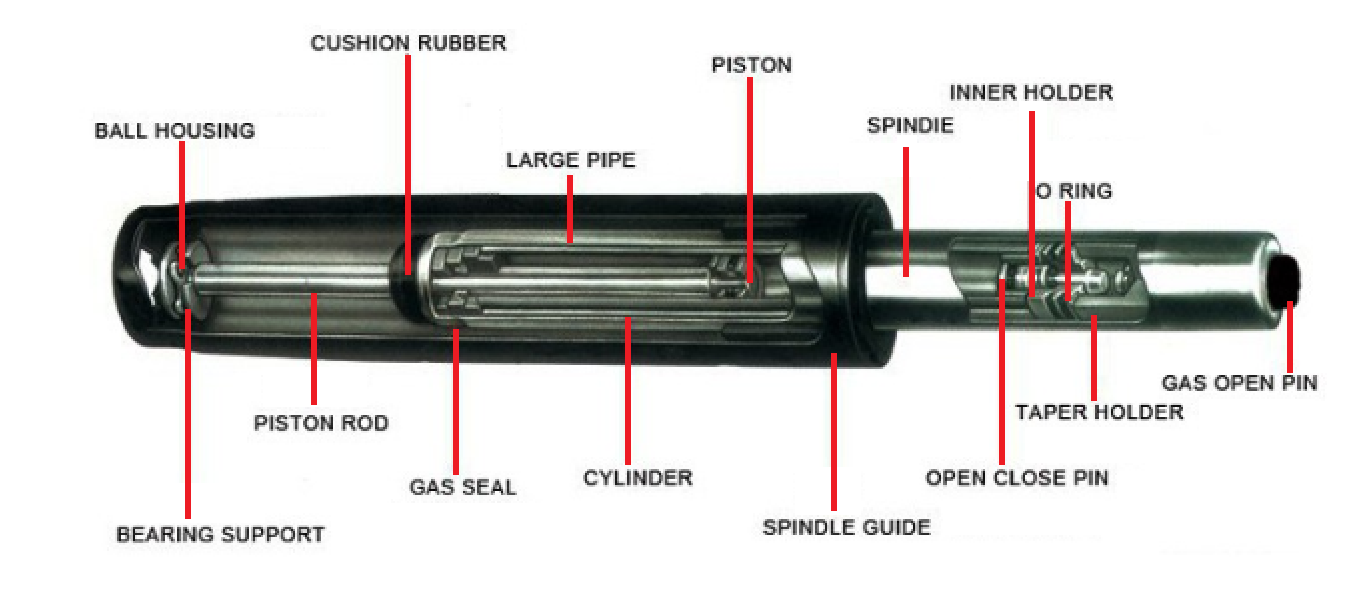
The pneumatic lifting mechanism consists of a base for the basket to be placed upon and a gas cylinder that is able to extend or retract due to pneumatic principles and also a lever that controls the locking of the piston. The main components that contribute to the function of a gas cylinder are the piston, cylinder and gas seals. 


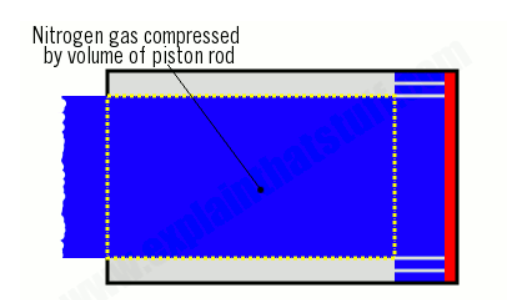
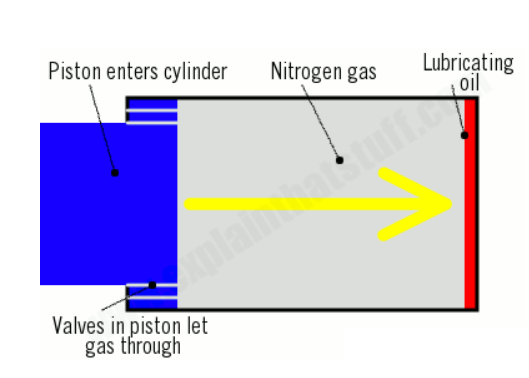
Pneumatic cylinders or sometimes referred to as a gas spring is a cylinder filled with air and enclosed with a piston within. A lever will then control the locking of the piston. When the lever is activated, pushing the piston will cause the air within to be compressed, raising the internal pressure within the enclosed cylinder. When the lever is activated again and there is no force acting on the piston, the internal pressure within the cylinder will push the piston outwards of the cylinder. This movement of the piston allows the basket to adjust its height according to the users actions.

Wheels:


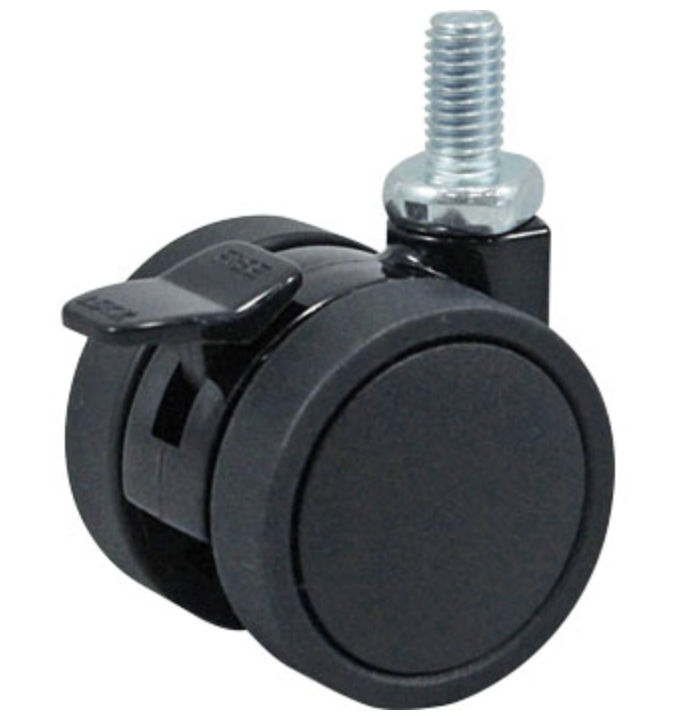
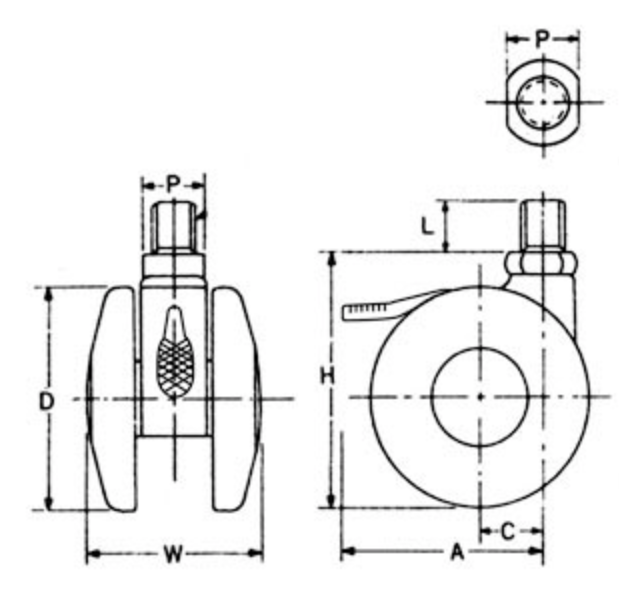
The second proposed improvement to the laundry basket is to install 5 wheels that would be screwed into the legs via screws. The wheel is attached to a swivel caster which ensures rotation of 360 degrees while under load. Each wheel has an allowable load of 40kgf, and combined they have a total allowable load of 200kgf. A braking mechanism can also be found on the wheel which restricts all movement and stops the product from moving freely. This will keep the load evenly distributed between the wheels preventing the load from tipping over. With the wheels mounted, the elderly would be able to move the laundry basket from point to point with ease. 


Wheel Diameter: 40mm
Mass: 60g
Type: Screw in type
Wheel width: 41.5mm
Allowable load: 40kgf       

Benefits:
The additional features added onto the laundry basket will greatly decrease the risk of elderly injuring themselves when doing laundry. The pneumatic lifting mechanism allows the user to adjust the basket's height and roller wheels will provide ease of movement when doing laundry.

Evaluation:
The features in the new laundry basket design have many benefits due to its adjustable height and easy maneuverability. However, there are two limitations due to the design.

The first limitation is the cost, the components of the new laundry basket design greatly increase the price of the basket. The new laundry basket will require a basket, base plate, pneumatic cylinder, legs, and wheels. Most of these components can actually be obtained from computer chairs. The price of a typical computer chair is around $34 (Lazada, 2020). Estimating the components from the chair needed, the price of the required components will be around three-quarters of the full computer chair price which is $25.50. Adding on a good quality basket from IKEA which is around $10 (Ikea, 2020), the total estimated price of the new laundry basket will be $35.50. A typical laundry basket from Ikea is around $10 to $30 and comparing this price to the new laundry basket, the difference is $5.50 to $25.50. 

The second limitation is that most elderly in Singapore have a stubborn mindset when it comes to their belongings. Usually, they will not be willing to try new designed products and also will not throw away their old products easily. Convincing the elderly to purchase the new laundry basket will be challenging as they have a usable one at home. The elderly that are living alone will not have anyone to discuss whether the new laundry basket will be useful and worth buying.

With the increasing rate of elderly living alone in Singapore, it is very important to ensure that they do not injure themselves while doing simple tasks at home as there is no one there to aid them.

Methodology:
Both Primary and Secondary research sources were used to reference information related to our report for its completion. 

Primary Research:
The team measured the weight of the typical laundry basket at maximum capacity. Primary research was done on the price of the laundry basket, and the price of the computer chair which gave us an estimate of how much the new laundry basket design will cost.  

Secondary Research:
To come out with possible modifications to improve the existing product, the team did research on the targeted audience, weaknesses of the product. Secondary resources were used to provide evidence for our statements, such as information regarding existing laundry baskets, problems with the existing designs and features in other products that can help solve these issues. References to these sites also provided us with ideas to add to the design proposal.

Concluding Statement:

In conclusion, the new laundry basket will reduce the risk of lower back strain of the elderly by incorporating a pneumatic lifting mechanism and wheels. The pneumatic lifting mechanism will consist of a gas cylinder which allows the height of the laundry basket to be adjusted freely by the user. The wheels attached to the leg of the laundry baskets will allow the users to push the basket with little effort, bringing about easy and free maneuverability. These two features will ensure that the elderly using the basket do not have to bend down to pick up clothes or lift the laundry basket to move it, thereby reducing the likelihood of lower back strain. This new laundry basket design will ensure that the elderly are able to do laundry at home safely and without much effort. 

References:
Chang, L. (2010). How to Wreck Your Back. Retrieved and adapted from

National Institute of Neurological Disorders and Stroke (2014) - Lower Back Pain Fact Sheet. Retrieved and adapted from https://www.ninds.nih.gov/disorders/patient-caregiver-education/fact-sheets/low-back-pain-fact-sheet

Ng, D. (2018). The loneliness of old age - and an experiment to see if Instagram can be a cure. Retrieved and adapted from https://www.channelnewsasia.com/news/cnainsider/the-loneliness-of-old-age-and-an-experiment-to-see-if-instagram-10675658

Repair Ad (2017). Washing Machine Capacity Explained. Retrieved and adapted from

Rabideau, C. (2019). The 7 Best Laundry Baskets of 2020. Retrieved and adapted from

Gas cylinder Concept

Wheel specifications

Concept of caster wheels

Pneumatic cylinder price

Lazada computer chair
Ikea quality laundry basket


Monday, 17 February 2020

Design Summary and Analysis (Final draft)


In the article “It's 2019 - Where’s My Super Suit”, Zelik (2019) writes about the significant and unique features of the exoskeleton made by his team as well as brief descriptions of current commercial versions of exoskeletons. The main function of an exoskeleton is to reduce the risk of muscular injuries. However, modern designs do not appeal to the public because they are cumbersome and costly. The writer endeavors to improve upon the modern designs with a few distinct features. One of these features includes has a “clothing-like” appearance that resembles a super suit consisting of vest, short, elastic bands and a switch. Another feature allows the user to move “freely and fully” by turning off the suit using the outfitted switch. In addition, the lack of batteries, motors and protruding parts offers a lightweight and seamless design. Lastly, Zelik (2019) claims that through laboratory tests, turning on the suit reduces substantial loads on the lower back.

The article provides several unique features of the exoskeleton developed by his team, that enables individuals with muscular injuries to be fitted with injury-specific solutions for personal mobility. However, the writer did not elaborate further on the reliability and safety of his exoskeleton which is necessary to promote the commercial opportunities and adoption of his device in the industry, as the public remains hesitant about exoskeletons due to physiological repercussions in the current commercial version.

First of all, the user would not be willing to wear exoskeleton if the design of the exoskeleton was cumbersome due to its bulky structure as the user will experience strain and fatigue on their body which outweighs its benefits. As stated by (Ulrey and Fathallah., 2013, as cited in Bosch 2016), limitation of discomfort is a challenge in the design of exoskeletons, even a modest degree of discomfort may impede the acceptance of the consumer. Hence, a strong emphasis on design ergonomics is required to minimize the negative repercussions the user will experience while using the exoskeleton to ensure they are suitable and desirable for the user to use. Thus, Zelik (2019)’s approach to incorporating a lightweight and seamless design into the exoskeleton would, therefore, provide the user with comfort.

In addition, safety requirements and protective measures should be enforced for industrial exoskeleton in periods of routine use, malfunction incidents and emergency events to accommodate a wearable exoskeleton for industrial workers, as exoskeleton may cease to operate while carrying loads and exposure to friction or pain on body parts contributes to fatigue and loss of control. As stated by Sullivan (2015), After an extensive search of potential functional criteria, it appears that there is no safety standard for an industrial exoskeleton. In the event of exoskeleton failure, Zelik (2019) could ensure the wearer’s safety by turning off the assistance using the outfitted switch, allowing the user to move freely.

Lastly, to bridge the gap between technology developers and users, it is desirable to understand the needs and priorities of consumers by surveying the end-users to develop an exoskeleton that meets their requirements. As stated by Isaksson (2017), future trends of lower-limb exoskeletons will primarily depend on consumer responses to how the needed mass markets will emerge. Hence, Zelik (2019) works closely with nurses and medical professionals with low back pain to make the design more ergonomic.

In conclusion, safety and reliability remain a key factor for the exoskeleton to be inducted into the mainstream consumer market while at the same time providing confidence to the end-users, who will know that they are getting exoskeleton products that are safe, reliable and perform as advertised. Zelik (2019) is working towards his vision in making the design more ergonomic and practical.


Zelik, K. (2019). It's 2019 - where’s my super suit. Retrieved and adapted from https://theconversation.com/its-2019-wheres-my-supersuit-115679

Bosch, T., van Eck, J., Knitel, K., de Looze, M. (2016) - The effects of a passive exoskeleton on muscle activity, discomfort and endurance time in forward bending work. Retrieved and adapted from https://www.ncbi.nlm.nih.gov/pubmed/26851481

Singh, B., Rafique, S., Singla, A., Singla, E., Isaksson, M., Singh, G. (2017) - Lower-limb exoskeletons: Research trends and regulatory guidelines in medical and non-medical applications. Retrieved and adapted from 

van Vorm, J., Nugent, R., Sullivan, L. (2015) - Safety and risk management in designing for the life-cycle of an exoskeleton. Retrieved and adapted from 
https://www.sciencedirect.com/science/article/pii/S2351978915003054

Wednesday, 12 February 2020

Design Summary & Analysis (Draft 2)

In the article “It's 2019 - Where’s My Super Suit”, Zelik (2019) writes about the significant and unique features of the exoskeleton made by his team as well as brief descriptions of current commercial versions of exoskeletons. The main function of an exoskeleton is to reduce the risk of muscular injuries. However, modern designs do not appeal to the public because they are cumbersome and costly. The writer endeavors to improve upon the modern designs with a few distinct features. One of these features includes has a “clothing-like” appearance that resembles a super suit consisting of vest, short, elastic bands and a switch. Another feature allows the user to move “freely and fully” by turning off the suit using the outfitted switch. In addition, the lack of batteries, motors and protruding parts offers a lightweight and seamless design. Lastly, Zelik (2019) claims that through laboratory tests, turning on the suit reduces substantial loads on the lower back.

The article provides several unique features of the exoskeleton developed by his team, that can be considered an advancement that enables individuals with muscular injuries to be fitted with injury-specific solutions for personal mobility. However, the writer did not elaborate on the reliability and safety of his exoskeleton which is necessary to promote the commercial opportunities and adoption of his device in the industry, as the public remains hesitant about exoskeletons due to major physiological repercussions in the current commercial version. 

First of all, although exoskeleton relieves some muscle groups, it may pose a health risk to the joints required to work harder to compensate. According to Rashedi et al (2014), the benefits induced by this device did not appear without broader physiological consequences, such as increased antagonist muscle activity in the joint.” Also, the user may experience significant discomfort if the exoskeleton not carefully designed. As stated by Ulrey and Fathallah (2013), Limitation of discomfort is a challenge in the design of exoskeletons, and might be a big issue standing in the way of wide application in the industrial field. Even a minimal level of discomfort might hinder user's acceptance. Hence, strong emphasis on design ergonomics is required to minimize the negative repercussions the user will experience while using the exoskeleton to ensure they are suitable and desirable for user to use.

Furthermore, safety requirements and protective measures are essential for industrial exoskeleton in periods of routine use, malfunction incidents and emergency events in order to accomodate a wearable exoskeleton for industrial workers, as exoskeleton may cease to operate while carrying loads and exposure to friction or pain on body parts contributes to fatigue and loss of control. This statement is reinforced by Sullivan (2015), after a comprehensive search of potential usable standards was conducted, it appeared that no safety standard exists for an industrial exoskeleton.

Lastly, in order to bridge the gap between technology developers and technology users, it desirable to understand the needs and priorities of consumers by surveying the end-users to develop an exoskeleton that meets their requirements. As stated by  Isaksson (2017), future trends of lower-limb exoskeletons will primarily depend on consumer responses to how the needed mass markets will emerge.

In conclusion, the exoskeleton may not be ready to be inducted in the commercial market as more assessments need to be conducted to improve the reliability and safety of the exoskeleton.


Zelik, K. (2019). It's 2019 - where’s my super suit. Retrieved and adapted from https://theconversation.com/its-2019-wheres-my-supersuit-115679

Bosch, T., van Eck, J., Knitel, K., de Looze, M. (2016) - The effects of a passive exoskeleton on muscle activity, discomfort and endurance time in forward bending work. Retrieved and adapted from https://www.ncbi.nlm.nih.gov/pubmed/26851481

Singh, B., Rafique, S., Singla, A., Singla, E., Isaksson, M., Singh, G. (2017) - Lower-limb exoskeletons: Research trends and regulatory guidelines in medical and non-medical applications. Retrieved and adapted from 


van Vorm, J., Nugent, R., Sullivan, L. (2015) - Safety and risk management in designing for the life-cycle of an exoskeleton. Retrieved and adapted from 
https://www.sciencedirect.com/science/article/pii/S2351978915003054


Sunday, 9 February 2020

Design Summary & Analysis (Draft 1)

In the article “It's 2019 - Where’s My Super Suit”, Zelik (2019) writes about the significant and unique features of the exoskeleton made by his team as well as brief descriptions of current commercial versions of exoskeletons. The main function of an exoskeleton is to reduce the risk of muscular injuries. However, modern designs do not appeal to the public because they are cumbersome and costly. The writer endeavors to improve upon the modern designs with a few distinct features. One of these features includes has a “clothing-like” appearance that resembles a super suit consisting of vest, short, elastic bands and a switch. Another feature allows the user to move “freely and fully” by turning off the suit using the outfitted switch. In addition, the lack of batteries, motors and protruding parts offers a lightweight and seamless design. Lastly, Zelik (2019) claims that through laboratory tests, turning on the suit reduces substantial loads on the lower back.

The article provides several unique features of the exoskeleton developed by his team, that can be considered an advancement that enables individuals with muscular injuries to be fitted with injury-specific solutions for personal mobility. However, the writer fails to demonstrate the reliability and safety of his exoskeleton which is necessary to promote the commercial opportunities and adoption of his device in the industry, as the public remains hesitant about exoskeletons due to major physiological repercussions in the current commercial version. 

First of all, although exoskeleton relieves some muscle groups, it may pose a health risk to the joints required to work harder to compensate. According to Rashedi et al (2014), the benefits induced by this device did not appear without broader physiological consequences, such as increased antagonist muscle activity in the joint.” Also, the user may experience significant discomfort if the exoskeleton not carefully designed. As stated by Ulrey and Fathallah (2013), Limitation of discomfort is a challenge in the design of exoskeletons, and might be a big issue standing in the way of wide application in the industrial field. Even a minimal level of discomfort might hinder user's acceptance. Hence, strong emphasis on design ergonomics is required to minimize the negative repercussions the user will experience while using the exoskeleton to ensure they are suitable and desirable for user to use.

Furthermore, safety requirements and protective measures are essential for industrial exoskeleton in periods of routine use, malfunction incidents and emergency events in order to accomodate a wearable exoskeleton for industrial workers, as exoskeleton may cease to operate while carrying loads and exposure to friction or pain on body parts contributes to fatigue and loss of control. This statement is reinforced by Sullivan (2015), after a comprehensive search of potential usable standards was conducted, it appeared that no safety standard exists for an industrial exoskeleton.

Lastly, in order to bridge the gap between technology developers and technology users, it desirable to understand the needs and priorities of consumers by surveying the end-users to develop an exoskeleton that meets their requirements. As stated by  Isaksson (2017), future trends of lower-limb exoskeletons will primarily depend on consumer responses to how the needed mass markets will emerge.

In conclusion, the exoskeleton may not be ready to be inducted in the commercial market as more assessments need to be conducted to improve the reliability and safety of the exoskeleton.


Zelik, K. (2019). It's 2019 - where’s my super suit. Retrieved and adapted from https://theconversation.com/its-2019-wheres-my-supersuit-115679

Bosch, T., van Eck, J., Knitel, K., de Looze, M. (2016) - The effects of a passive exoskeleton on muscle activity, discomfort and endurance time in forward bending work. Retrieved and adapted from https://www.ncbi.nlm.nih.gov/pubmed/26851481

Singh, B., Rafique, S., Singla, A., Singla, E., Isaksson, M., Singh, G. (2017) - Lower-limb exoskeletons: Research trends and regulatory guidelines in medical and non-medical applications. Retrieved and adapted from 


van Vorm, J., Nugent, R., Sullivan, L. (2015) - Safety and risk management in designing for the life-cycle of an exoskeleton. Retrieved and adapted from  https://www.sciencedirect.com/science/article/pii/S2351978915003054


Thursday, 30 January 2020

Design Summary Draft 2 - Where's my Supersuit

In the article “It's 2019 - Where’s My Super Suit”, Zelik (2019) writes about the significant and unique features of the exoskeleton made by his team as well as brief descriptions of current commercial versions of exoskeletons. The main function of an exoskeleton is to reduce the risk of muscular injuries. However, modern designs do not appeal to the public because they are cumbersome and costly. The writer endeavors to improve upon the modern designs with a few distinct features. One of these features includes has a “clothing-like” appearance that resembles a super suit consisting of vest, short, elastic bands and a switch. Another feature allows the user to move “freely and fully’ by turning off the suit using the outfitted switch. In addition, the lack of batteries, motors and protruding parts offers a lightweight and seamless design. Lastly, Zelik (2019) claims that through laboratory tests, turning on the suit reduces substantial loads on the lower back. 

Reference

Zelik, K. (2019). It's 2019 - where’s my super suit. Retrieved and adapted from https://theconversation.com/its-2019-wheres-my-supersuit-115679

Thursday, 23 January 2020

Design Summary Draft 1 - Where's my Supersuit

In the article “It's 2019 - where’s my super suit”, Zelik (2019) writes about the significant and unique features of the exoskeleton made by his team as well as briefly describing current commercial versions of exoskeletons. The main function of an exoskeleton is to reduce the risk of muscular injuries however modern designs are cumbersome and costly which do not appeal to the public. The writer Zelik endeavors to improve upon the modern designs with a few distinct features. To begin with, the new design has a “clothing-like” appearance that consist of a vest, short, elastic bands and a switch. Furthermore, the design allows the user to move “freely and fully’ by turning off the suit using the outfitted switch. On top of that, the absence of batteries, motors and protruding parts provides a lightweight and seamless design. Last but not least, the writer Zelik (2019) asserts that laboratory tests have verified turning on the suit will reduce substantial loadings on the lower back. 

Reference

Karl Zelik. (2019). It's 2019 - where’s my super suit. Retrieved and adapted from https://theconversation.com/its-2019-wheres-my-supersuit-115679

Critical Reflection

My primary goal for this module is to overcome my anxiety of public speaking and be able to express my thoughts clearly and confidently to...